


When I was doing research on human touch for my grad school capstone project, the word “transformative” came up a lot. People talked about experiences they had had that stuck in their minds for years after the actual point of human contact. I too have shared touch with people who were suffering and feeling isolated, and when we talked months later, they brought it up and told me how much it meant to them. Touch triggers our affective cells in our skin, those that register emotion. One second of touch can tell the person being touched what the other person is trying to convey.
To our ancestors, touch signaled safety. To have your people close by was to know that you had a higher chance of survival. Same for the beginning of our lives. The research on touch’s role in the neurological development of infants is well-documented. Healthy touch from parents gives a child a leg up with emotional regulation and attachment. These effects last a lifetime.
Unfortunately, touch’s power to transform another person’s life doesn’t always work in a positive way. It can change a person’s life for the worse.
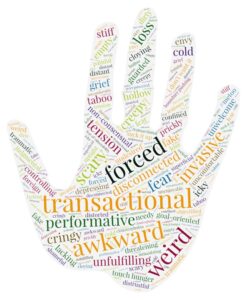
I’ve thought about this a lot this week when thinking about two issues that show an utter disregard for people’s humanity and bodily autonomy: the Epstein files and ICE. In both of these, touch is wielded as a weapon and a tool to establish power over. Not only are the other person’s needs and desires ignored, but the message is clear: you do not have a say in what happens to you, and there are zero concern for your safety and well-being.
All of the stories from the Epstein survivors talk about the profound negative impact of touch that lasts long after the experience. And there are stories coming out about sexual assault of women in ICE custody, not to mention children being ripped from the loving embrace of their families to be handled in an inhumane fashion. The trauma created by this cruel physical contact might negatively transform their lives, and likely the lives of their children and grandchildren.
I frequently have conversations with people who tell me they dislike being touched, but they want to be able to enjoy it more. Many times they tell me stories of abusive upbringings that leave them unable to connect with others. At a visceral level, their bodies tell them that another person touching them signals danger and loss of control. And so they move through the world, feeling like they are not part of the circle of community and family that we are wired to crave, starving for the feeling of belonging, or feeling like they matter.
It angers me that much of our world is structured to ignore the transformational power of touch, but it is still there, waiting for us to slow down and turn toward each other with kindness and tenderness. Wanted, intentional caring touch can help us tell a different story about humans: that we can support and comfort each other, that we all experience loss and grief and trauma, and that we can take care of each other person-to-person, instead of thinking about others simply in terms of what we want from them and how we can use them for our own power, pleasure or profit.
I might not have the power to bring justice to a system that ignores wrongdoings, but I absolutely have the power to transform another person’s life in a positive way when they are hurting, through an offer of holding their hand while they cry. A little touch can go a long way toward making a person’s life better, to help them feel seen or supported…or it can make them feel unsafe, scared and distrusting.
Choose kindness. Choose connection. Choose responsibility. Choose transformation.